
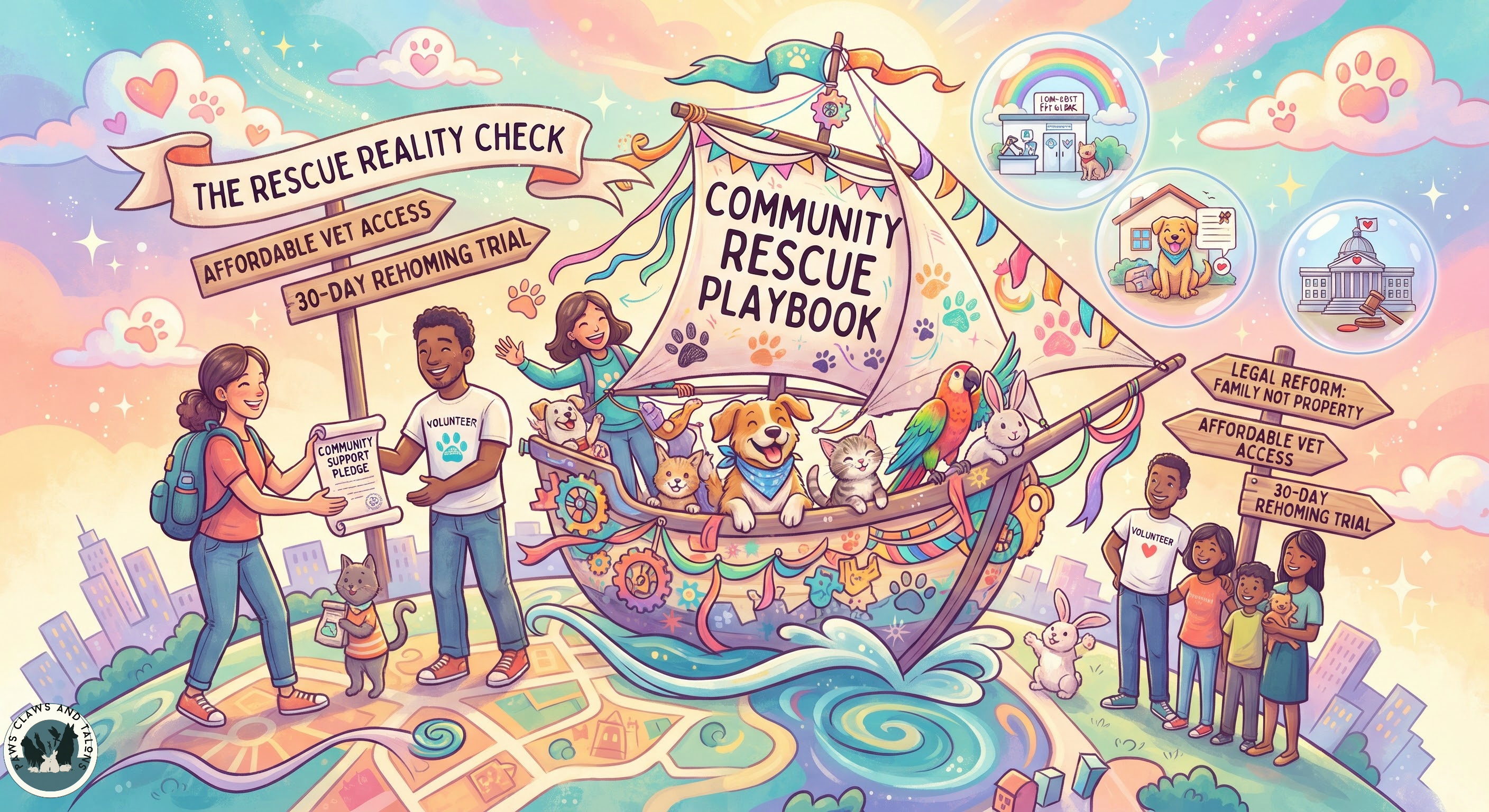
Let’s be honest, darling. The current animal rescue model is spinning faster than a caffeinated hamster on a wheel, and everyone in the trenches is feeling the burn. We all started doing this because we love animals, but somewhere along the way, rescue became an open-door convenience store where folks expect us to magically absorb every lifestyle inconvenience, housing hiccup, or momentary frustration.
Spoiler alert:
We are out of magic. Our capes are in the wash, and our Personal Capacity Numbers (PCNs) are flashing red.
It is time for a massive, unapologetic culture shift. If we want to save more lives without every single rescuer turning into a crispy husk of burnout, we need to change how the public views rescue. Here is how we can build a brand-new community playbook together.
Step 1: Rescue Can Be Our ICU, Not an Easy-Bake Oven (And Pets Deserve to Be Recognized as Family, Not Property)
Right now, too many people treat animal rescue like an airport drop-off zone. Fluffy got old? Time for a new kitten model! Having a baby? Toss the cat into the system!
A huge part of this casual disposal stems from a deeply broken root: the outdated legal framework that still classifies companion animals as mere “property.” As long as the law views a living, feeling animal the same way it views a television set or a toaster, society will continue to treat them like disposable goods. Changing the culture means changing the code. We should advocate for legal reform—pushing jurisdictions to recognize animals as sentient beings with legal protections, supporting landmark legislative efforts, and getting involved with legal defense networks. To dive in and help move this forward, we can explore resources and support active legislative campaigns through organizations like the Animal Legal Defense Fund (ALDF). When we shift how the law sees them, the public will be forced to catch up.
Until then, we can reframe rescue on the ground for what it actually is: an inpatient medical ICU. Just like human hospitals, rescue should be reserved for true, life-or-death emergencies where every other option has been exhausted. If an animal is facing an immediate crisis, abuse, neglect, or a true safety emergency, we step in. But if someone simply wants to trade in their pet for a trendier, younger model because they got bored? Hard pass. Pets are family, not disposable fast fashion.
Step 2: Embracing a “Skin in the Game” Partnership
When a well-meaning finder or current caregiver reaches out for surrender placement, our first response shouldn’t be, “Sure, bring them right over!”
Instead, let us flip the script into a collaborative partnership. If someone wants to save a furry little chaos maker, we can encourage them to roll up their sleeves and be part of the journey. Rescuers should only bridge the gap needs—we are not bottomless sponges.
Next time someone requests rescue placement, we can invite them to show how they are investing in this animal’s survival. Finders can bring more than just frantic energy to the table. Examples of shared teamwork include:
- Bringing a donation or basic supplies to support the transition.
- Putting basic veterinary care (like vaccines or a check-up) into the animal and providing proof at surrender.
- Helping with transport or securing rides.
- Donating a few hours of volunteer time or helping share fundraising posts.
Saying “I have zero dollars and can’t help at all” is a cop-out. Everyone can do something. We can all choose to either help fix the crisis or step back from clogging the system.
Step 3: Try Before You Cry (Bridging the Cost Barrier, Access to Care, & The 30-Day Rule)
We also need to call out the elephant in the room: veterinary care and spay/neuter access have become outrageously expensive, pricing everyday families out of basic pet stewardship. True culture change means demanding affordable, accessible vet care and pop-up clinics in every community so that “I can’t afford it” doesn’t remain the default pipeline to surrender.
To help bridge this gap, we should actively direct community members toward accessible care networks—such as local low-cost spay/neuter initiatives, regional financial assistance funds, and advocacy groups like the Humane Society Veterinary Medical Association (HSVMA) which work to expand veterinary access for under-resourced families. When we help people find affordable care locally, we keep families together.
Unless there is an absolute emergency, let us encourage community members to press pause before demanding an immediate shelter intake. Can the pet stay in their home while we help connect them to community resources or cover gaps? Can we try a structured 30-day rehoming trial with proper vetting and safe peer-to-peer screening before throwing our hands in the air?
Let us teach responsibility together. Rushing to surrender the second things get slightly inconvenient teaches everyone that pets have no intrinsic value. We can prove otherwise.
Step 4: Building the Surrender Prevention Safety Net
To truly stop the flood, we have to catch pets before they even reach the brink of surrender. Building a sustainable community rescue model means investing in proactive prevention rather than just reactive intake.
We can establish and support local lifelines such as pop-up pet food pantries for families facing temporary financial pinches, behavioral helplines to troubleshoot common training hurdles before frustration sets in, and confidential temporary emergency fostering networks for folks fleeing domestic violence, facing unexpected medical hospitalizations, or experiencing sudden housing displacement. When a community rallies to provide these vital safety nets, families don’t have to choose between their pets and their survival.
Step 5: De-Normalizing Impulse Adoptions and Shifting the Consumer Mindset
We also need to look at the other side of the revolving door: impulse adoptions. Too often, pets are treated like holiday impulse buys, novelty gifts, or lifestyle accessories that get cast aside the moment they require actual time, training, or financial investment.
Changing the culture means ending the consumer mindset entirely. We can educate adopters from day one that welcoming a pet is a lifelong, unyielding commitment—not an online shopping order that can be returned when it loses its initial novelty. When adoption processes emphasize long-term stewardship over quick clearance rates, we protect animals from ever entering the cycle of displacement in the first place.
Step 6: Guarding the Fort (PCNs, Emergency Reserves, and Rescuer Boundaries)
Rescuers can master the art of the glorious, unapologetic “NO.”
Every caregiver and rescue can establish a Personal Capacity Number—the absolute limit of animals they can responsibly house without keeping everyone in chaos. Here is our new golden math: Take total capacity, back it up a few notches so nobody lives perpetually on the edge, and then lock away one-third of those remaining spots exclusively for true, blood-pumping emergencies.
To every frontline advocate reading this: enforcing these boundaries is not selfish—it is foundational infrastructure. If you burn out, your entire local ecosystem collapses. Protecting your mental health and your physical capacity ensures you can stay in this fight for the long haul.
If a situation isn’t an emergency, the answer can be a kind, firm redirection. We can help market, we can offer resources, and we can cheer folks on from the sidelines, but our emergency vaults should stay closed for non-emergencies.
The Bottom Line
We won’t fix the current crisis overnight, but we can change the culture and the laws upholding it. By holding the public accountable, ending convenience surrenders, fighting to rewrite property laws into sentience protections, demanding accessible vet care, building robust surrender prevention safety nets, rejecting impulse consumerism, and protecting our own rescuer boundaries as a team, we can protect our sanity and save more lives.
We are either part of the solution or part of the gridlock. Grab an oar, darlings—we’ve got animals to save!
Leave a Reply