
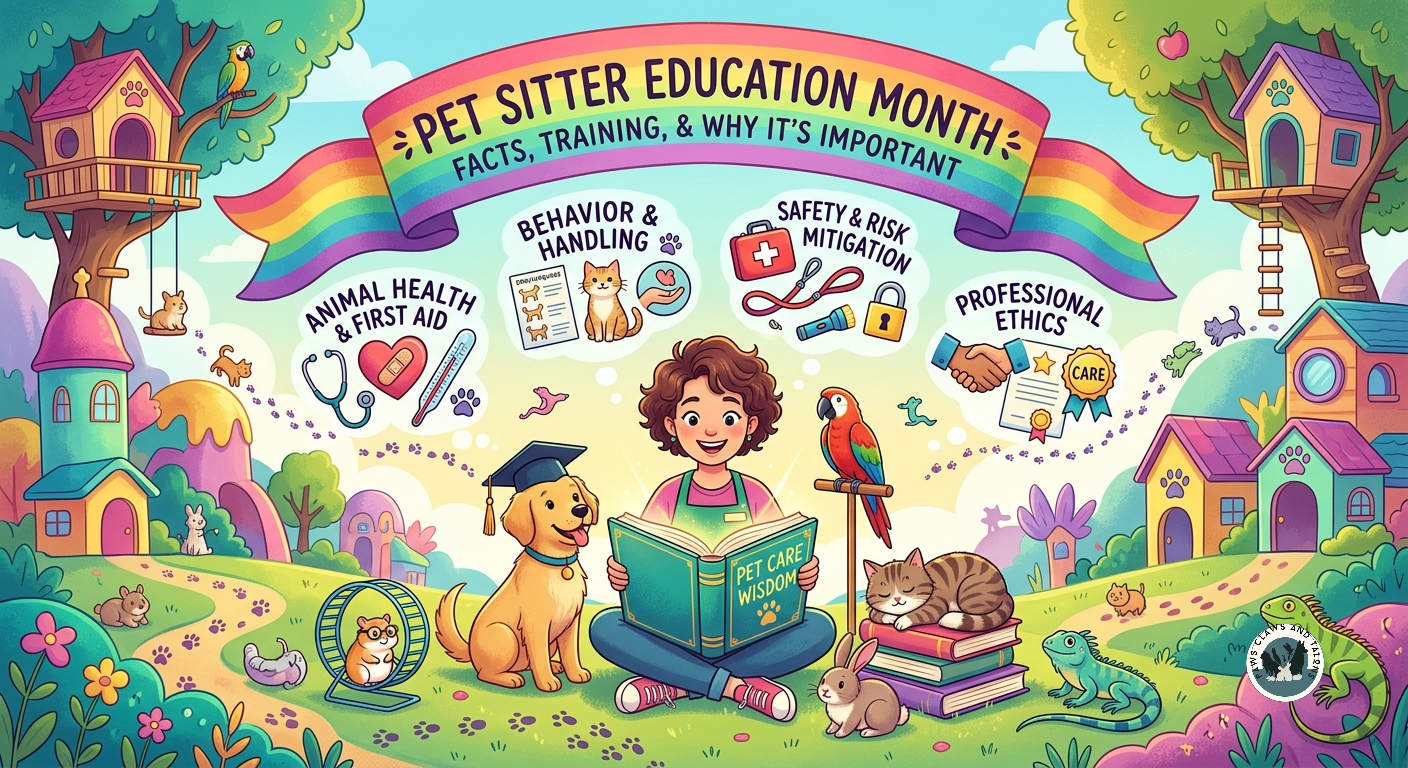
September marks Pet Sitter Education Month, a dedicated time created by Pet Sitters International (PSI) to spotlight the continuous learning that elevates professional pet care.While loving animals is the heart of pet sitting, professional pet care is a complex discipline requiring rigorous preparation, deep practical knowledge, and operational vigilance.
Comprehensive education transforms a passionate animal lover into a trusted, reliable professional capable of keeping pets safe and homes secure.
Core Pillars of Pet Sitter Education
Comprehensive pet sitter training goes far beyond standard feeding and dog walking, covering critical areas of animal welfare and business operations.
Animal Health, First Aid, and Emergency Response
Emergency readiness is the cornerstone of professional pet sitter training. Education in this pillar equips sitters to recognize early signs of illness, subtle changes in vital signs, or acute distress before a situation becomes critical. Sitters learn hands-on pet CPR, wound dressing, heatstroke management, and protocols for safely administering oral or topical medications. Training also emphasizes parasite prevention and strict sanitation protocols to control zoonotic diseases and prevent cross-contamination between households.
Species-Specific Behavior and Handling
Every animal species—and every individual within a species—communicates differently. Education covers canine and feline body language to help sitters read subtle stress signals, manage anxiety, and prevent behavioral escalation. Sitters learn low-stress handling techniques, proper fit and usage of walking equipment (harnesses, gentle leaders, and collars), and safe transport methods. Training extends to species beyond cats and dogs, ensuring proper husbandry for small mammals, exotic pets, birds, and reptiles.
Safety, Risk Mitigation, and Disaster Planning
Keeping pets secure requires identifying hidden hazards and preparing for worst-case scenarios. Pet sitter education covers household and seasonal safety risks, escape-prevention techniques during door entries and exits, and lost-pet retrieval procedures. Disaster response planning is another vital component, teaching sitters how to coordinate evacuations, assemble pet emergency kits, and safeguard animals during natural disasters or power outages.
Professional Ethics, Legalities, and Business Operations
Running a professional pet-sitting service requires sound business administration and risk management. Curriculum includes client consultation standards (“meet and greets”), service agreements, background checks, liability insurance, bonding, and clear protocols for client privacy and home security. Sitters also learn how to establish compassionate, respectful procedures for handling pet loss, supporting grieving families while managing emergency end-of-life logistics professionally.
Why Continuous Education Matters
Investing in ongoing professional development directly improves animal welfare and client peace of mind.
- Proactive Safety: Trained sitters spot subtle physical or behavioral red flags immediately, allowing for rapid veterinary intervention.
- Stress Reduction: Understanding species behavior allows sitters to use low-stress techniques that keep pets comfortable while owners are away.
- Client Trust: Formal education, certifications (like PSI’s Certified Professional Pet Sitter designation), bonding, and insurance differentiate dedicated professionals from casual hobbyists.
- Industry Standards: Continuous learning keeps pet sitters updated on evolving animal care research, nutrition guidelines, and industry safety protocols.
Pet Sitter Education Month serves as a great reminder that quality pet care is built on a foundation of knowledge, preparation, and skill.Continuing education ensures our companion animals receive the highest standard of care every day.
Leave a Reply