
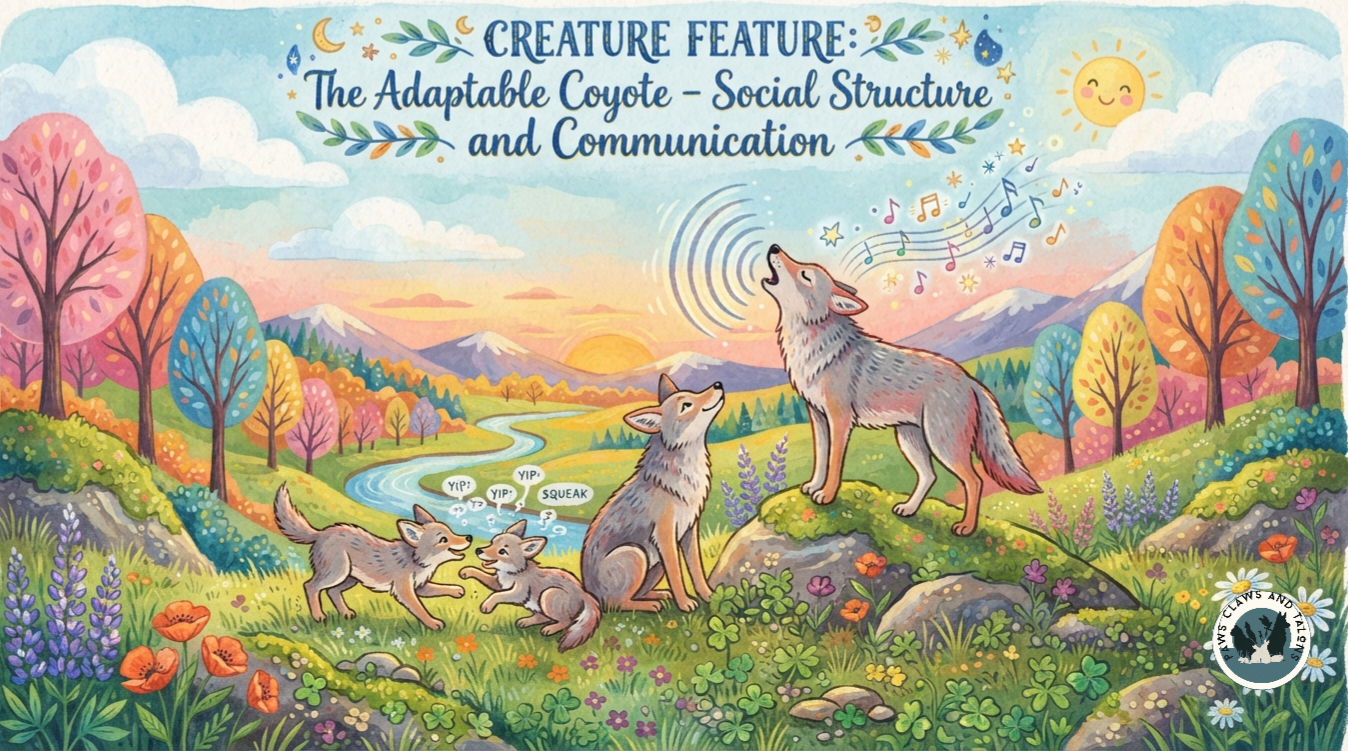
While they are often viewed as solitary hunters, the reality of coyote social life is far more complex and nuanced. The foundation of coyote society is the family unit, typically centered around a mated pair that often stays together for many years. These core family groups may also include offspring from the previous year, known as “helpers,” who assist in raising the new pups. Beyond this nuclear family, coyotes are highly territorial and maintain their home ranges with a sophisticated blend of vocalizations, scent marking, and body language.
The Language of the Wild
Coyotes are perhaps most famous for their complex vocal repertoire, which transforms the nighttime silence of the Minnesota landscape into a vibrant communication network. Their iconic, high-pitched yips, excited barks, and fluctuating howls are not random noise; they convey critical information to other pack members and neighboring rivals. Howling is often used for long-distance communication, serving to assemble the family group, announce territorial claims, or locate other individuals. Yipping and barking, meanwhile, are typically used for close-range interactions within the pack, expressing everything from greetings and alarm signals to playful excitement among pups.
Complex Canid Culture
This intricate system of calls allows coyotes to maintain strong social bonds without necessarily needing to travel together as a large, cohesive pack like wolves. Their communication enables them to coordinate hunting efforts, defend territories, and raise their young effectively in diverse and often challenging environments. Understanding these vocalizations offers a fascinating window into the rich social world of one of North America’s most adaptable and vocal carnivores.
Leave a Reply