
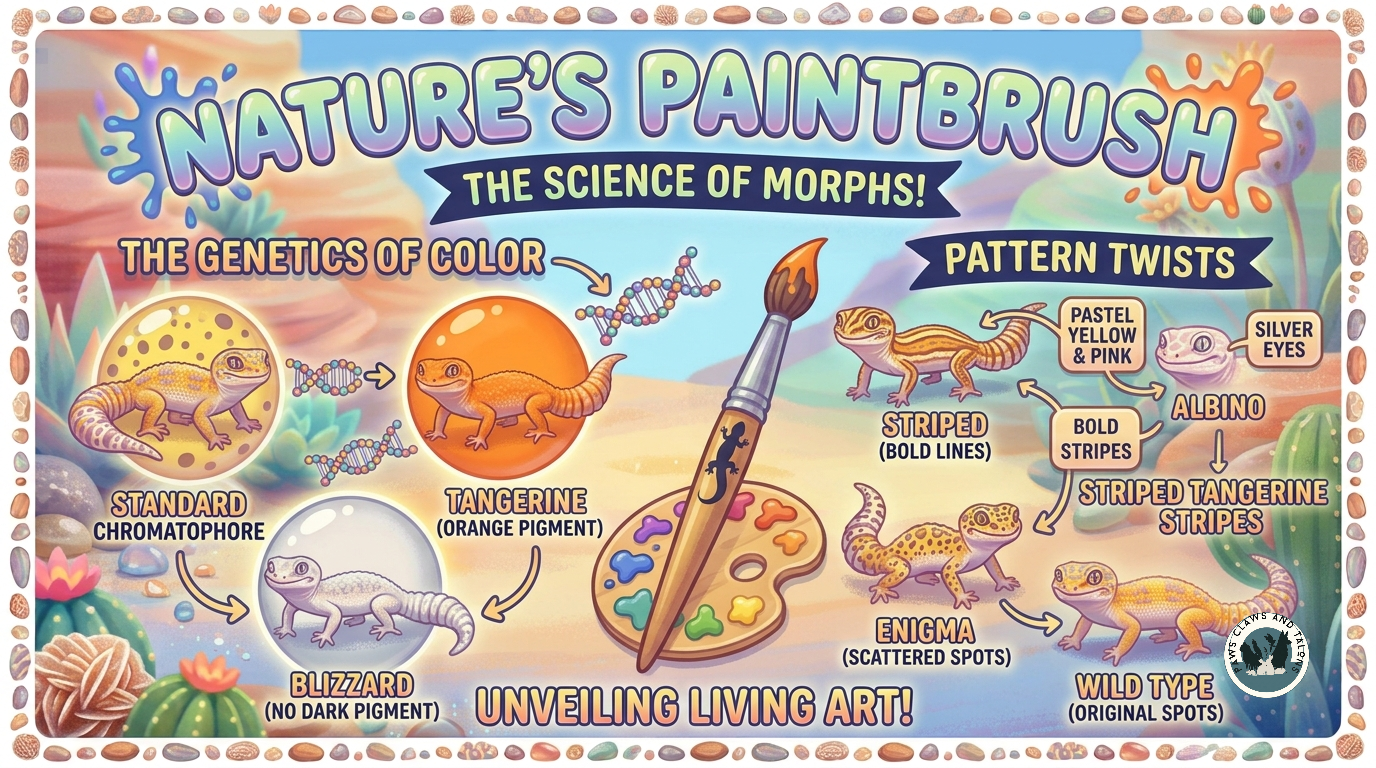
In the wild, leopard geckos wear a classic uniform: a bright yellow coat peppered with dark, dramatic spots that help them blend seamlessly into the shadows of their rocky desert habitats. Outside the wild, however, selective genetics have transformed these fascinating reptiles into a living canvas of incredible colors and patterns known as “morphs.”
The Genetics of Color
A gecko’s appearance comes down to chromatophores—specialized pigment-producing cells in their skin. By studying how different genetic traits are passed down, naturalists and breeders have unlocked hundreds of visual variations.
Some morphs alter color pigments entirely. For example, “Tangerine” geckos show off deep, fiery orange tones, while “Blizzard” geckos completely lack dark spots, resulting in a solid, sleek white or pale grey appearance. Others, like “Tremper Albinos,” lack black pigment entirely, leaving behind soft pastel yellows, pinks, and lavenders paired with striking silver or reddish eyes.
Pattern Twists and Visual Wonders
Color is only half the story; pattern mutations rewrite the leopard gecko’s signature spots. “Enigma” morphs scatter tiny spots unpredictably like paint splatters, while “Striped” geckos trade traditional spots for clean, bold lines running down their backs from head to tail.
Whether a gecko rocks wild desert spots, bold orange stripes, or a completely spot-free coat, every morph demonstrates the amazing flexibility of genetics. It shows how small tweaks in DNA can craft totally unique, living art across the exact same species.
Leave a Reply