
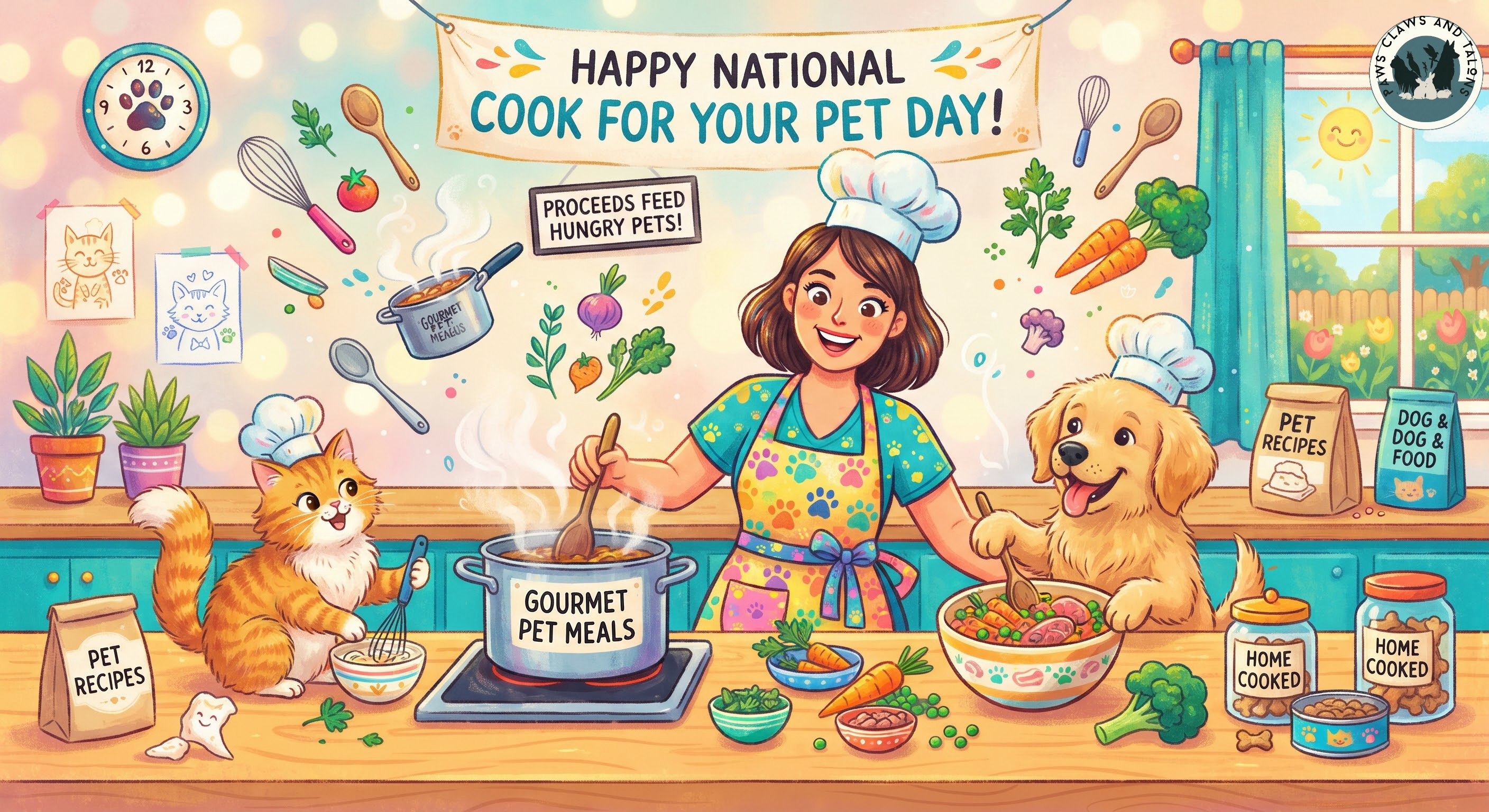
Ever looked down at your cat’s bowl, stared at those uniform brown crunchy pellets, and thought, “There has to be more to life than this mystery dust”? You are not alone. Across kitchens everywhere, humans are trading in commercial convenience for cutting boards and stockpots in honor of National Cook for Your Pet Day, celebrated every November 1st.
While the exact origin of this holiday is a bit hazy—with no single corporate founder or historical committee stepping forward to claim credit—it bubbled up organically from passionate pet parents and animal advocates who wanted to elevate everyday feeding into an art form. It is a day dedicated to trading mass-produced processed food for wholesome, kitchen-crafted goodness.
The Secret History of Pet Diets: How We Got Here
To understand why cooking for our pets is making a massive comeback, we have to look at how commercial pet food evolved.
Mass-market kibble didn’t become a household staple until the mid-20th century, largely spurred by wartime metal shortages that forced pet food out of tin cans and into dry paper bags. Before that, dogs and cats subsisted mostly on table scraps, fresh meat scraps, and homestead provisions.
While modern commercial foods have made feeding convenient, they often rely on heavy processing, artificial preservatives, and fillers to extend shelf life. Taking a day—or a meal—to cook from scratch connects us back to how we have historically cared for our animal companions: with fresh, recognizable ingredients.
Why Your Pet’s Body Will Thank You
Cooking for your companion animal is not just about spoiling them rotten with delicious smells; it comes with major biological perks.
- Ingredient Transparency: When you prep the meal, you know down to the exact gram what is going into the bowl. There are no hidden chemical binders or unpronounceable additives.
- Allergy and Sensitivity Control: Many pets suffer from chronic skin issues or itchy paws triggered by common commercial fillers like corn, wheat, or specific proteins. Home-cooked meals allow you to eliminate triggers instantly.
- Moisture Optimization: Especially for cats, who have a notoriously low thirst drive and a high propensity for kidney issues, introducing moisture-rich, fresh-cooked meals is an absolute game-changer for long-term organ health.
The Golden Rules of Kitchen Safety
Before you turn your kitchen into a Michelin-star restaurant for animals, remember that human food safety and pet food safety are two different ballgames.
- The Toxic Trio: Onions, garlic, chives, and leeks are members of the Allium family and destroy red blood cells in dogs and cats. They must never touch your pet’s plate.
- Seasoning Restrictions: Salt, sugar, and heavy spices are fantastic for humans and terrible for animal livers and kidneys. Keep their portions completely unseasoned before you separate out your own dinner.
- Nutritional Balance: A single home-cooked meal as a special treat is wonderful, but long-term home-cooked diets require precise balance (especially calcium-to-phosphorus ratios) to avoid severe nutritional deficiencies.
Get Your Chef Hat On: Recipes Available Now!
Ready to ditch the can opener and treat your four-legged roommate like royalty? We have you covered.
Here at the Paws Claws and Talons Foundation, we have professional-grade recipes available for purchase right now! We are offering a specialized dog food recipe and a dedicated cat food recipe for just one dollar each.
Every single penny from these recipes goes right back into the nonprofit. 100% of the proceeds feed hungry animals and support our daily rescue operations. Grab your recipes today, protect your counters from furry culinary thieves, and let’s get cooking!
Available Recipes
Cat Food Recipe
$1 per recipe
Dog Food Recipe
$1 per recipe
Leave a Reply