
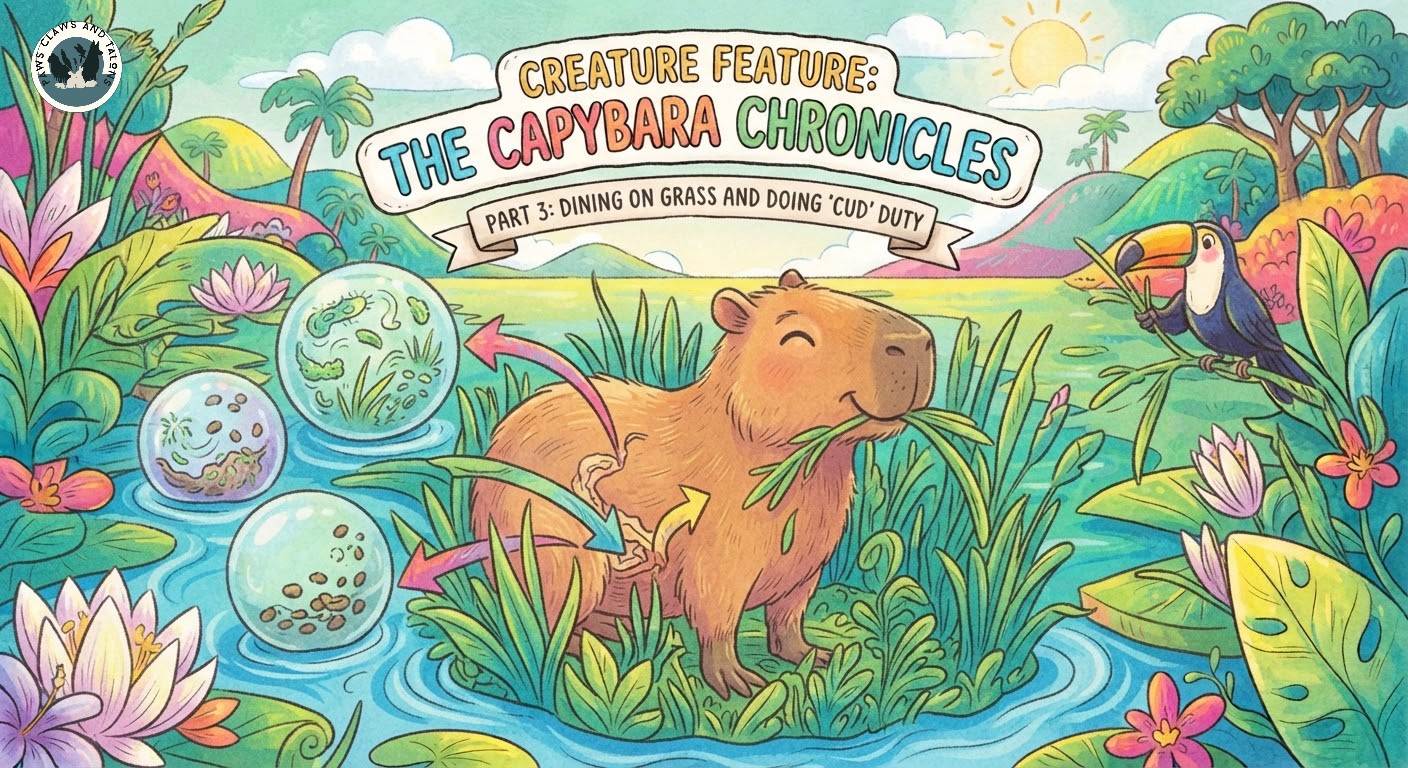
Welcome back, adventurous eaters and science sleuths, to our ongoing capybara chronicles! If you’ve been wondering what fuels a barrel-shaped, semi-aquatic giant that can weigh as much as a small human, you are in for a treat. Today, we are peering into the capybara’s lunchbox to explore their dietary habits and a biological recycling system that can only be described as delightfully eccentric.
The Salad Bar Enthusiasts
Capybaras are strict, unyielding herbivores. You won’t catch one hunting down insects or craving a cheeseburger. Instead, their daily menu is almost exclusively plant-based, featuring a heavy rotation of thick river grasses, reeds, and aquatic plants. When they are hanging out on agricultural land or near human settlements, they are also known to develop a refined palate for cultivated crops like melons, grains, and squash.
With teeth that grow continuously throughout their lives to grind down tough, abrasive grasses, a capybara spends a massive chunk of its day happily mowing down vegetation. Think of them as the world’s most relaxed lawnmowers, minus the noisy motor and gas cans.
The Ultimate Digestive Hack: Coprophagy
Now, here is where things get brilliantly weird. Grass is notoriously difficult to digest. It is packed with tough cellulose fibers that require specialized gut bacteria to break down. Cows handle this by chewing a cud, regurgitating partially digested plant matter, and chewing it all over again.
Capybaras take a totally different—and far more streamlined—approach. They practice something called coprophagy, which is a polite scientific way of saying they eat their own specialized droppings.
Before you wrinkle your nose, there is actual genius at work here! Capybaras produce two different types of feces: regular waste and soft, nutrient-packed pellets rich in microbial protein generated during the first round of digestion. By eating those specific soft pellets straight from the source, they give their digestive tract a second chance to absorb all the vitamins and proteins they missed the first time around. It’s nature’s ultimate recycling program, ensuring zero waste and maximum nutrition from a leafy lunch.
Stay tuned, because in Part 4, we are looking at what happens when a giant, grass-munching rodent faces off against the wild’s fiercest predators, and how they trade the jungle for a life of luxury in captivity!
Leave a Reply