
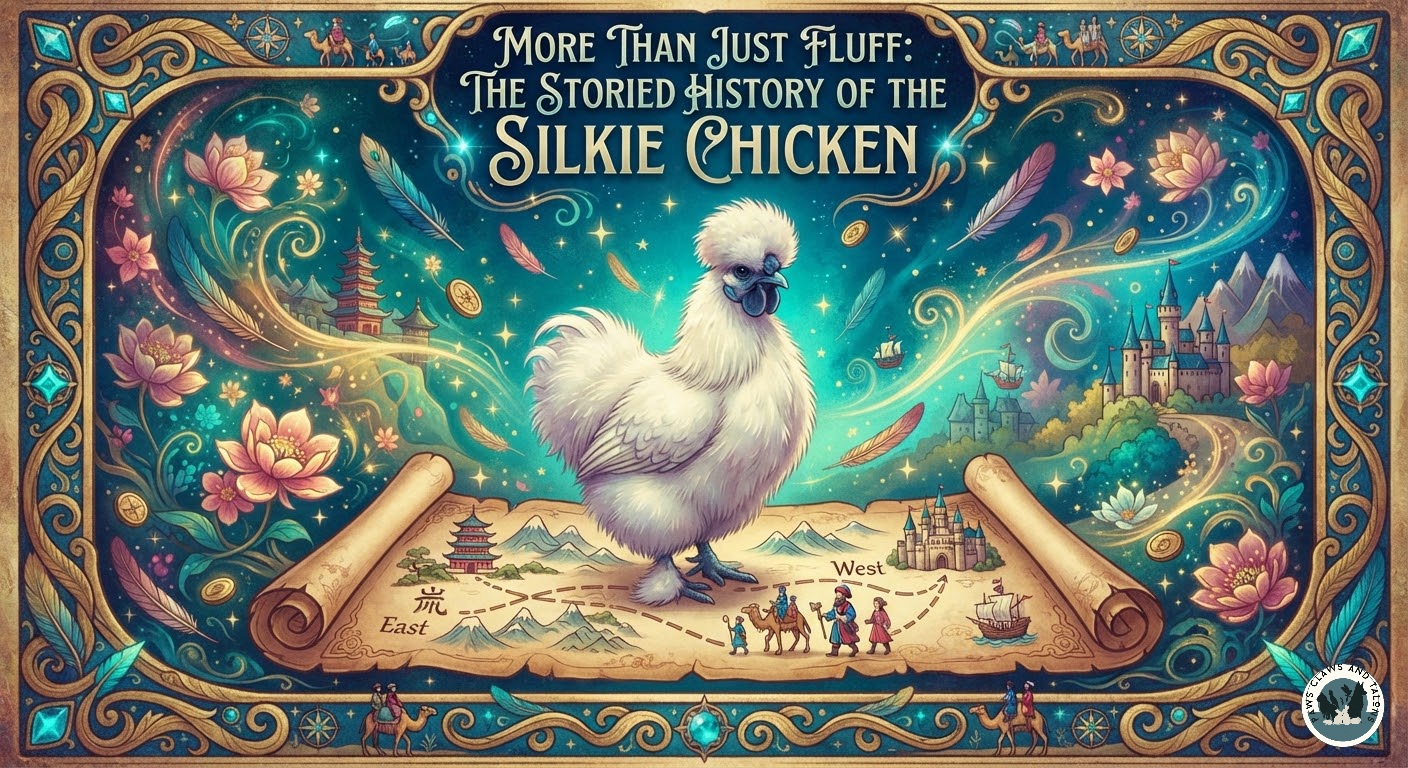
A Legend Wrapped in Silk
Welcome back to our fluffy creature feature series! If our first stop left you completely enchanted by the Silkie’s unzipped plumage and turquoise earlobes, get ready to travel back in time. The history of this majestic little bird is just as textured, mysterious, and magical as its feathers.
The Ancient Eastern Roots
While today’s Silkies are busy ruling the backyard coop, their ancient ancestors were turning heads across Asia as early as the Han Dynasty around 206 BC. Long before they became modern pets, early Eastern texts described fascinating “fur chickens” that were prized for their exotic beauty and unique qualities. They weren’t just ordinary barnyard fowl; they were treasures fit for emperors and trade routes alike.
Marco Polo’s Feathered Discovery
Cue the grand adventures! One of the most delightful historical links to the Silkie comes straight from the legendary explorer Marco Polo. During his travels through Asia in the 13th century, Polo chronicled sightings of mystical chickens sporting fur-like plumage and pitch-black skin. While he didn’t use our modern name “Silkie,” his vivid descriptions paint an unmistakable picture of these whimsical birds making their way across the globe via the legendary Silk Road.
From Furry Rumors to Fancy Feathers
By the time Silkies finally waddled into Europe and America in the 19th century, they caused quite a stir. Their bizarre appearance was so unbelievable that cheeky Victorian showmen actually tried to convince gullible crowds that Silkies were the secret lovechild of a rabbit and a chicken! Thankfully, those wild rumors faded as poultry lovers stepped in, officially recognizing the breed and celebrating them for the magnificent, one-of-a-kind marvels they truly are.
Stay tuned, because next up we are unlocking the Silkie’s ultimate superpower: their legendary, round-the-clock broody instincts!
Leave a Reply