
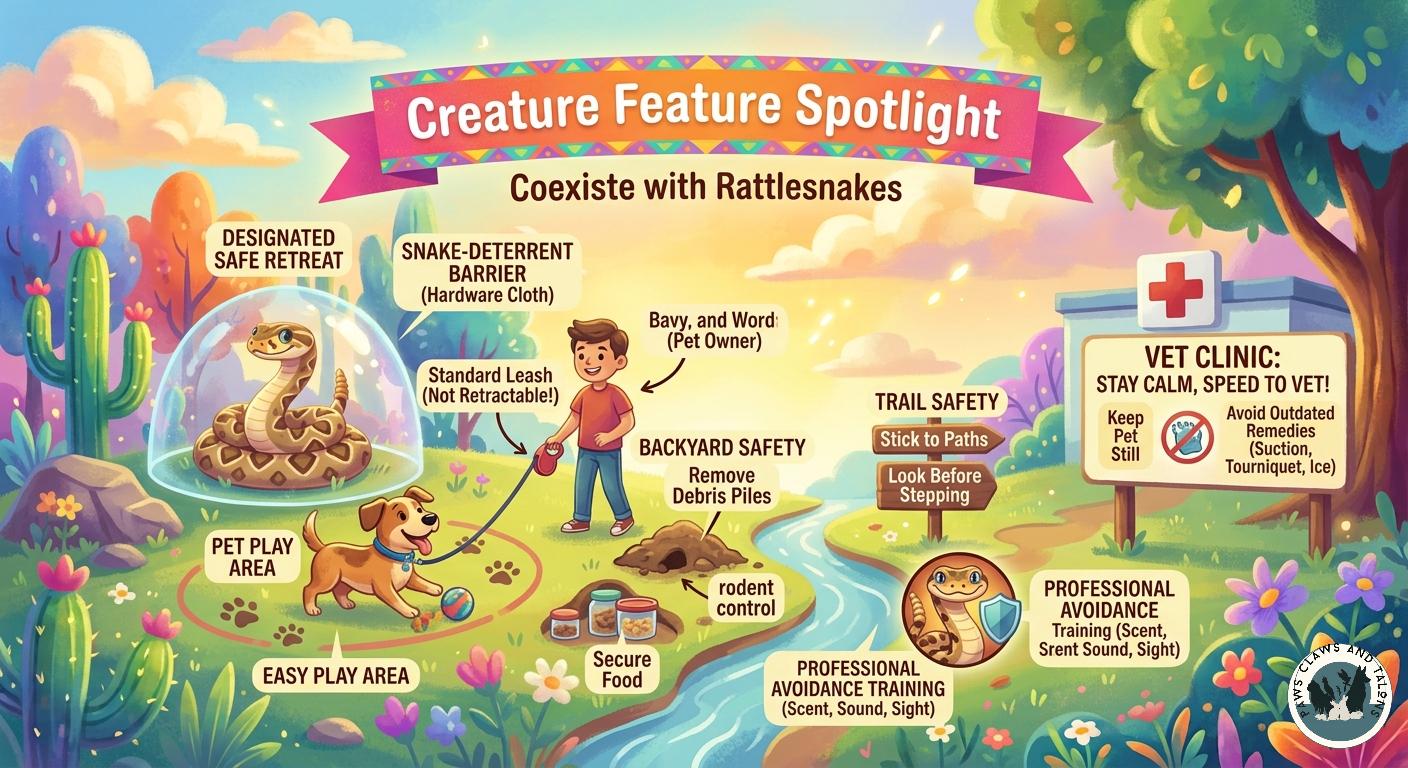
Welcome back to our Creature Feature Spotlight series on rattlesnakes. In our previous post, we explored the fascinating biological mechanisms and venom apparatus that make these pit vipers so unique. Today, we are focusing on practical real-world applications for animal lovers, outdoor enthusiasts, and pet owners on how to share native spaces safely and protect household pets.
Creating a Snake-Deterrent Yard Environment
Preventing unexpected encounters at home starts with managing your physical surroundings. Rattlesnakes seek out spots that offer shade, protection, and steady sources of food. Removing brush piles, tall weeds, stacked lumber, and dense ground clutter eliminates prime hiding places. Managing rodent populations around outbuildings, keeping pet food stored in airtight containers, and securing trash receptacles removes the primary scent lures that attract wildlife. Installing quarter-inch hardware cloth along the bottom of perimeter fencing, dug several inches into the soil, creates an effective physical barrier that keeps native reptiles from entering yards and domestic play spaces.
Trail Safety and Smart Outdoor Practices
When exploring local parks, hiking trails, or natural areas, awareness is your best line of defense. Always keep pets on a standard non-retractable leash to maintain control and prevent curious dogs from sticking their noses into rock crevices or tall grasses. Stick strictly to established paths where ground visibility is high, and avoid stepping over fallen logs or large rocks without looking at the ground directly on the other side first. If you hear a rattle while out on a walk, stop immediately, identify the location of the sound, and calmly take several steps back to grant the snake space to retreat.
Understanding Rattlesnake Avoidance Training
For dog owners who live in or frequently visit areas with active snake populations, professional snake avoidance training is a valuable protective measure. Utilizing positive reinforcement and behavioral conditioning, these specialized classes teach dogs to recognize the distinct scent, visual movement, and rattling sound of pit vipers. Once trained, dogs learn to proactively move away from the snake and alert their handlers, turning a potentially dangerous curiosity into a reliable protective reflex.
Emergency Protocols for Pet Encounters
If a domestic pet does experience a snake encounter, remaining calm and acting quickly makes all the difference. Immediately move your pet a safe distance away from the snake to prevent additional strikes. Keep your pet as still and quiet as possible, as elevated heart rates speed up the circulation of venom through the tissue. Transport your pet directly to the nearest emergency veterinary facility without delay. Avoid using outdated remedies like suction kits, tourniquets, ice packs, or cutting the wound, as these methods cause further tissue damage and delay critical veterinary care such as antivenom treatment.
Respecting wildlife means learning how to share habitats safely without causing unnecessary harm to native species or our domestic animals. Join us for post five, where we will clear up widespread misconceptions, urban legends, and myths surrounding rattlesnake behavior.
Leave a Reply