
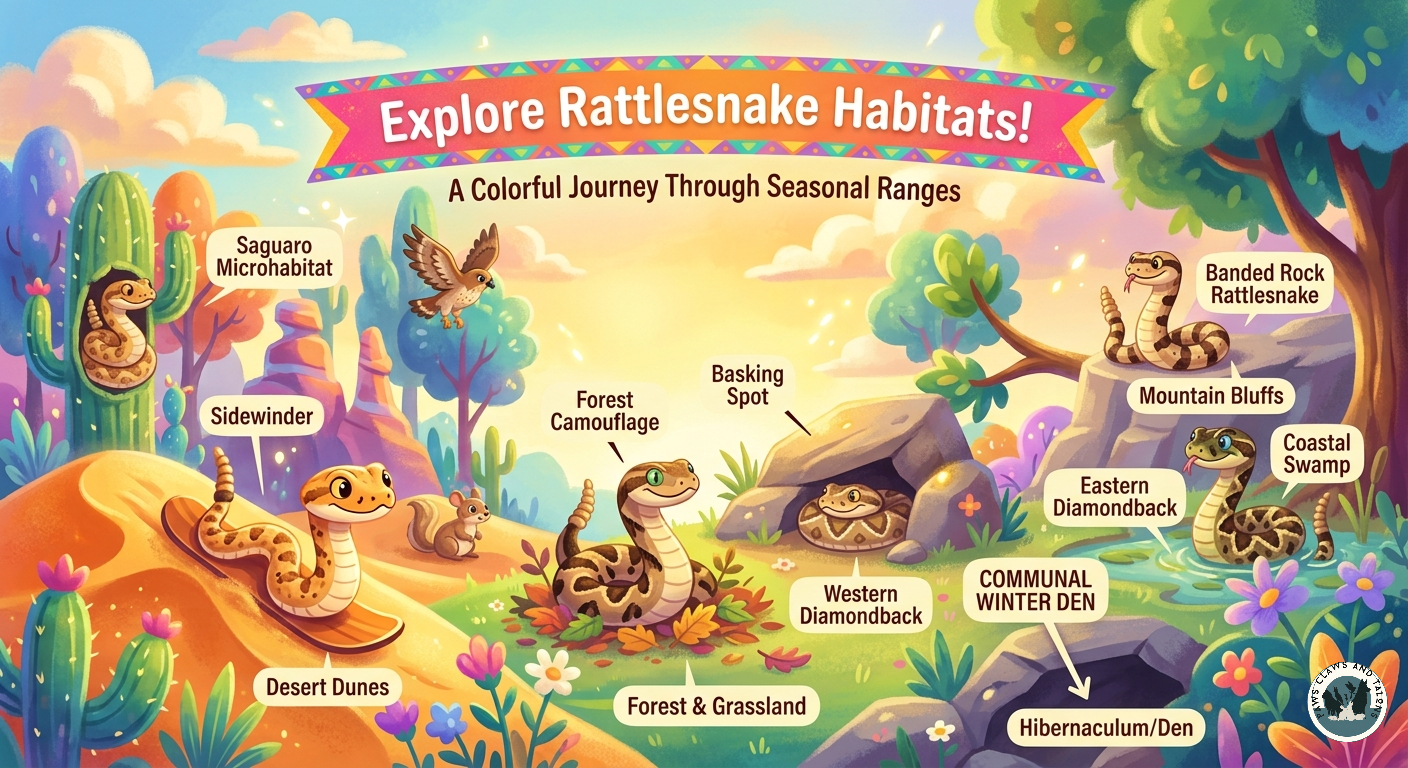
Welcome back to our Creature Feature Spotlight series on rattlesnakes. In our first post, we learned how to identify various North American pit viper species. Now, we are exploring where these fascinating reptiles live, how they adapt to diverse landscapes, and where they go as the seasons change.
A Diverse Range of North American Landscapes
Rattlesnakes are remarkably resilient creatures that have adapted to thrive in a vast array of environments. While many people automatically picture a rattlesnake slithering across a scorched desert, their reach extends much further. Depending on the species, rattlesnakes inhabit arid desert dunes, dry brushlands, rocky mountain bluffs, tallgrass prairies, dense hardwood forests, and even coastal swamps. Their ability to regulate their body temperature using their surroundings allows them to call almost every corner of North America home, provided they have adequate shelter, prey, and sunshine.
Mastering Microhabitats and Camouflage
Within these larger ecosystems, rattlesnakes rely heavily on microhabitats for survival and hunting. Microhabitats are small, specific areas that provide localized cover and climate control. A rattlesnake might spend its afternoon coiled beneath a sun-warmed granite ledge, tucked inside a hollow log, or hidden within dense ground vegetation. These spots offer safety from larger predators like hawks and coyotes while providing prime ambush locations for small rodents. Their intricate skin patterns blend seamlessly into leaf litter, soil, and rock faces, making concealment their primary defense strategy.
Seasonal Movements and Thermal Regulation
As cold-blooded reptiles, rattlesnakes depend entirely on external heat sources to maintain their body temperature. During the warm spring and summer months, they are most active, venturing out from safe retreats to hunt, mate, and bask in the sun. In the heat of midsummer, particularly in desert regions, rattlesnakes often shift to a nocturnal schedule, becoming active during cooler evening and nighttime hours to avoid dangerous daytime temperatures.
The Winter Den Strategy
When temperatures drop in autumn, rattlesnakes undergo a remarkable seasonal shift. Because they cannot survive freezing conditions, they retreat to underground shelters known as hibernacula or dens. These dens are often located deep inside rock crevices, abandoned mammal burrows, or natural caverns below the frost line. Rattlesnakes frequently return to the exact same hibernaculum year after year. In cooler northern and high-altitude regions, hundreds of snakes from different local species may gather in a single communal den to share warmth and survive the winter months together in a state of dormant rest called brumation.
Understanding where rattlesnakes live and how their behavior shifts with the seasons is essential for sharing the outdoors safely. Join us in post three, where we will take a deep dive into rattlesnake anatomy, heat-sensing superpowers, and the crucial distinction between venom and poison.
Leave a Reply