
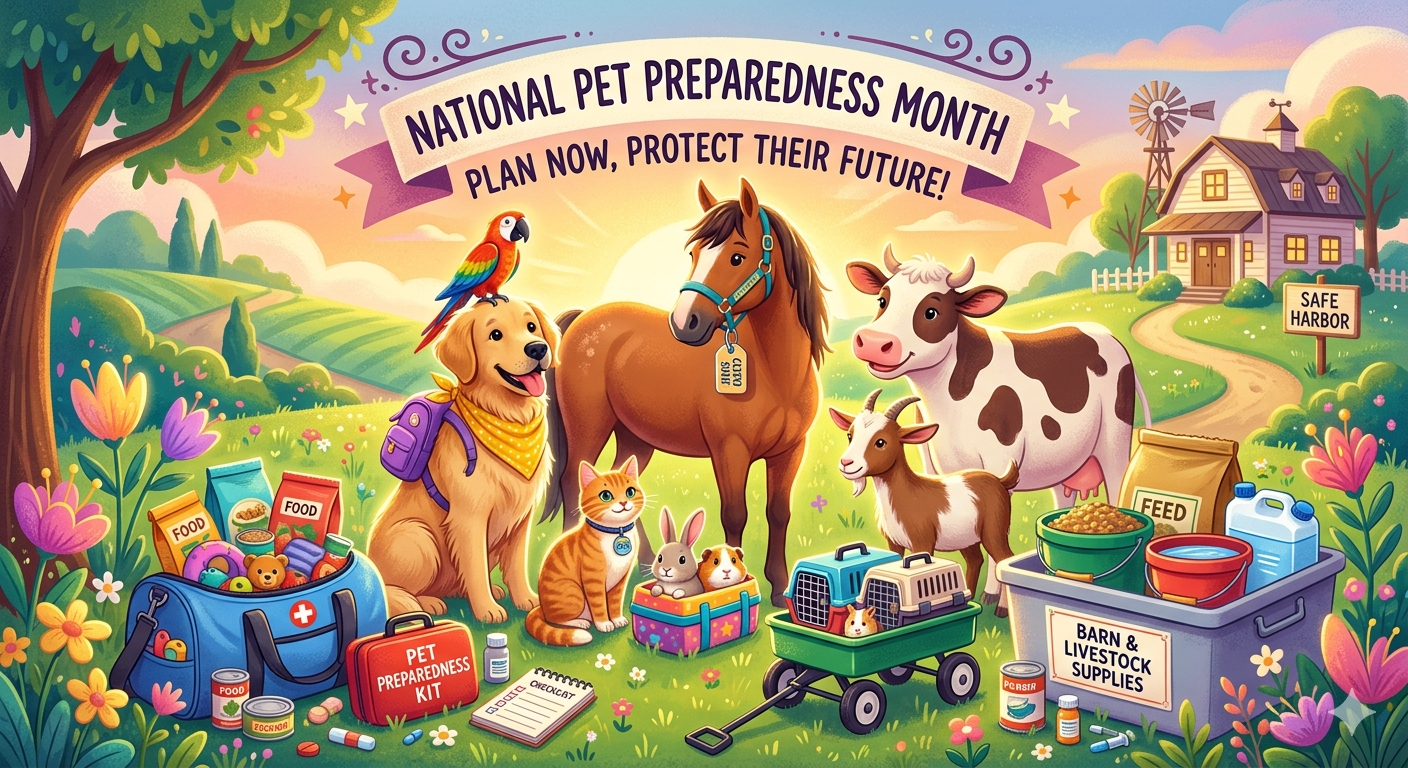
When disaster strikes, chaos doesn’t care if a pet weighs two ounces or two thousand pounds. If an emergency forces an evacuation, leaving animals behind should never be the fallback plan. If a structure isn’t safe for humans, it isn’t safe for them either. True preparedness requires having a clear strategy tailored to the exact species in your care long before the alarms sound. Chaos is a terrible project manager, so planning now ensures you can keep your cool when it matters most.
Companion Animals: The Grab-and-Go Strategy
The window to leave a crisis zone is often measured in minutes, making pre-packed resources essential. Every small or household pet needs an individual, secure travel carrier stored in an easily accessible location. Inside or alongside that carrier, keep a waterproof emergency kit packed with a seven-day supply of food and water, collapsible bowls, a manual can opener, and a two-week supply of necessary medications.
Identification is the single most important tool for reunification. Ensure collars carry up-to-date tags, and verify immediately that microchip registrations are active and linked to current contact information. Keep physical copies of vaccination records and medical histories in a waterproof bag, as most emergency shelters and boarding facilities require proof of immunization to prevent disease outbreaks.
For smaller companion animals like rodents, reptiles, or amphibians, the kit must include specific husbandry supplies. Ensure you have extra bedding, small hide boxes to reduce extreme stress, a week’s worth of species-appropriate food, and a reliable water bottle.
Equine and Bovine: Large-Scale Logistics
Evacuating large animals and livestock requires massive coordination, heavy equipment, and early decision-making. Waiting for a mandatory evacuation order before moving large stock is a high-risk gamble. Safe transport hinges entirely on trailer access and trailer training. Horses and cattle must be accustomed to loading calmly under normal conditions, as a panicked animal will refuse to board a trailer during a crisis.
Every animal should have clear, weather-resistant identification. Halters can be fitted with permanent brass ID tags. In an absolute emergency, contact details can be written directly on the animal’s hooves using a permanent marker or livestock paint sticks.
It is also vital to maintain a network of pre-arranged agricultural destinations outside your immediate geographic area, such as county fairgrounds, racetracks, or private stables that accept temporary livestock placement. Your barn kit must contain sturdy lead ropes, leather halters, flashlights, wire cutters, and a minimum of a three-day supply of specialized feed or hay alongside any daily medications.
The First-Aid Essentials
A universal foundation of pet preparedness is a dedicated medical kit capable of handling minor injuries or stabilizing an animal until a veterinarian can see them. The baseline supplies should be adapted to the size and species of the animals on your property.
For the Small Crew
Your kit should include VetWrap, Telfa non-stick pads, and conforming gauze for paw injuries or lacerations. Keep sterile saline solution on hand for flushing eyes or debris from small wounds, along with a mild chlorhexidine solution. Essential tools include tweezers for tick or splinter removal, blunt-nosed bandage scissors, a digital thermometer, and styptic powder or silver nitrate sticks to quickly stop bleeding from torn nails or minor cuts.
For the Large Crew
For livestock and horses, stock up on large cotton combine rolls, heavy gauze, and elastic adhesive bandages for leg wraps and major pressure dressings. Keep large volumes of sterile saline or povidone-iodine solution for scrubbing deep lacerations or puncture wounds. Your hardware should include a heavy-duty twitch or lead shank for restraint, heavy bandage shears, a rectal thermometer with a secure clip, and antibiotic ointments or specialized wound powders designed for open-air healing.
Do One Thing Today
True readiness isn’t built in a single frantic afternoon. This week, pick just one task to tackle. Check your microchip registries, test your trailer doors, or pack a single waterproof bin for your smallest companions. By taking steps today, you ensure that every member of your ecosystem stays safe, secure, and accounted for when it matters most.
Leave a Reply