
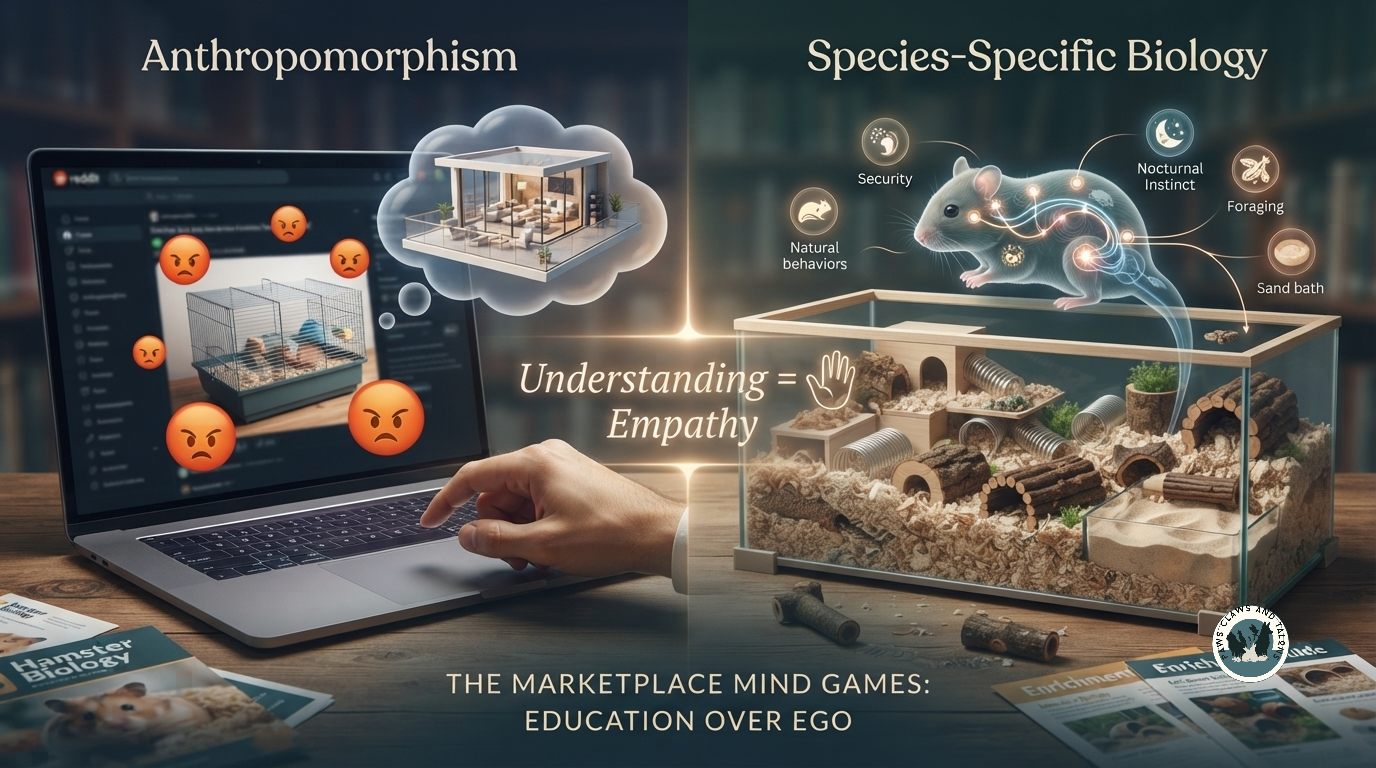

If you spend any time scrolling through online marketplace listings, you have undoubtedly stumbled upon a common internet phenomenon: someone posts a pre-loved small animal cage, and within seconds, the comment section transforms into a theatre of hostility. Red-faced angry emojis drop like passive-aggressive depth charges, completely devoid of actual context, explanation, or constructive dialogue.
It is a fascinating sociological spectacle. Somewhere along the dark corridors of social media, internet culture decided that slapping an angry face on a stranger’s post counts as an advanced degree in zoology. But let’s analyze what is actually transpiring here. An angry emoji does not impart a single shred of knowledge. It does not inform an unknowing seller, it does not guide a confused buyer, and it most certainly does not materialize an optimized habitat for a stressed-out animal. Instead, it serves one sole purpose: signaling that an internet crusader possesses a fragile combination of unearned superiority, profound frustration, and a deep-seated preference for performative outrage over genuine communication.
The Counterproductive Nature of Public Outrage
When the primary objective is supposed to be animal welfare, throwing digital tantrums achieves the exact opposite of education. Anger without action is merely an expensive exercise in self-importance. When commentators yell at people, hurl insults, or weaponize emojis on local buy-and-sell groups, they are not building a bridge to enlightenment. They are erecting a reinforced concrete wall.
The human brain relies on fundamental defense mechanisms: the exact microsecond it senses aggression, it ceases processing incoming data and begins evaluating a perceived threat. All a marketplace seller hears in that moment is frantic, irrational noise from someone demonstrating hostility. It triggers instant defensiveness, shuts down any possibility of genuine learning, and leaves the animal trapped in the exact same enclosure it started in. Shouting at individuals and framing their actions as malicious over a plastic-and-wire habitat does not save a single pet. It merely satisfies an urge for moral superiority.
In truth, this toxic brand of lashing out is significantly more detrimental to the animal community than a beginner placing a pet in a suboptimal cage. The more hostile animal advocates behave toward newcomers, the less likely those everyday individuals are ever to ask for assistance, guidance, or advice. When we act like arrogant elitists rather than patient educators, we isolate the very people who require direction, and the animals ultimately pay the price for our ego.
The Pinterest Trap and the Perils of Anthropomorphism
This dynamic brings us to the psychological core of the entire issue: textbook anthropomorphism. Humans suffer from a deeply ingrained habit of projecting their own human traits, lifestyle desires, emotional needs, and aesthetic Pinterest boards onto biological organisms that operate on entirely different evolutionary frequencies.
This mirrors the frequent headache observed in the pet community regarding the obsession over picturesque setups. Many desire an enclosure that resembles an interior designer’s minimalist social media feed, yet zero actual research goes into what the animal’s biology genuinely requires. Observers look at a tiny rodent and conclude that because they would detest a compact living space, the animal must require an open-plan luxury loft with soaring high ceilings and unobstructed panoramic views.
However, small rodents are not human real estate investors seeking modern architectural marvels. They are small, nocturnal prey species whose entire neurobiology and evolutionary wiring are designed to evade predation from aerial and terrestrial hunters.
To a dwarf hamster, a massive, wide-open glass tank devoid of dense, overhead cover does not feel like an upscale penthouse. It feels like an exposed, precarious target zone sitting squarely in the middle of a predator’s hunting ground. Forcing a tiny prey animal into a vast, unstructured expanse triggers acute anxiety, elevates cortisol levels, and induces chronic stress responses that genuinely compromise health and immune function.
Conversely, a properly structured, secure environment paired with deep, tunneling-safe bedding, multiple hides, and daily out-of-cage enrichment provides the exact sanctuary and psychological safety that their specific biology demands.
Cultivating Education Over Ego
True, effective animal care has nothing to do with projecting human emotional baggage onto small mammals, and it certainly has nothing to do with dropping passive-aggressive emojis on marketplace listings. It is rooted entirely in understanding actual species-specific biology, mastering proper enrichment strategies, and choosing to educate our community members with patience, curiosity, and objective facts.
If we genuinely care about the well-being of animals, it is time to abandon comment-section hostility. Let us instead treat everyday pet owners with grace, transforming our words from defensive brick walls into welcoming bridges of knowledge.
Leave a Reply