
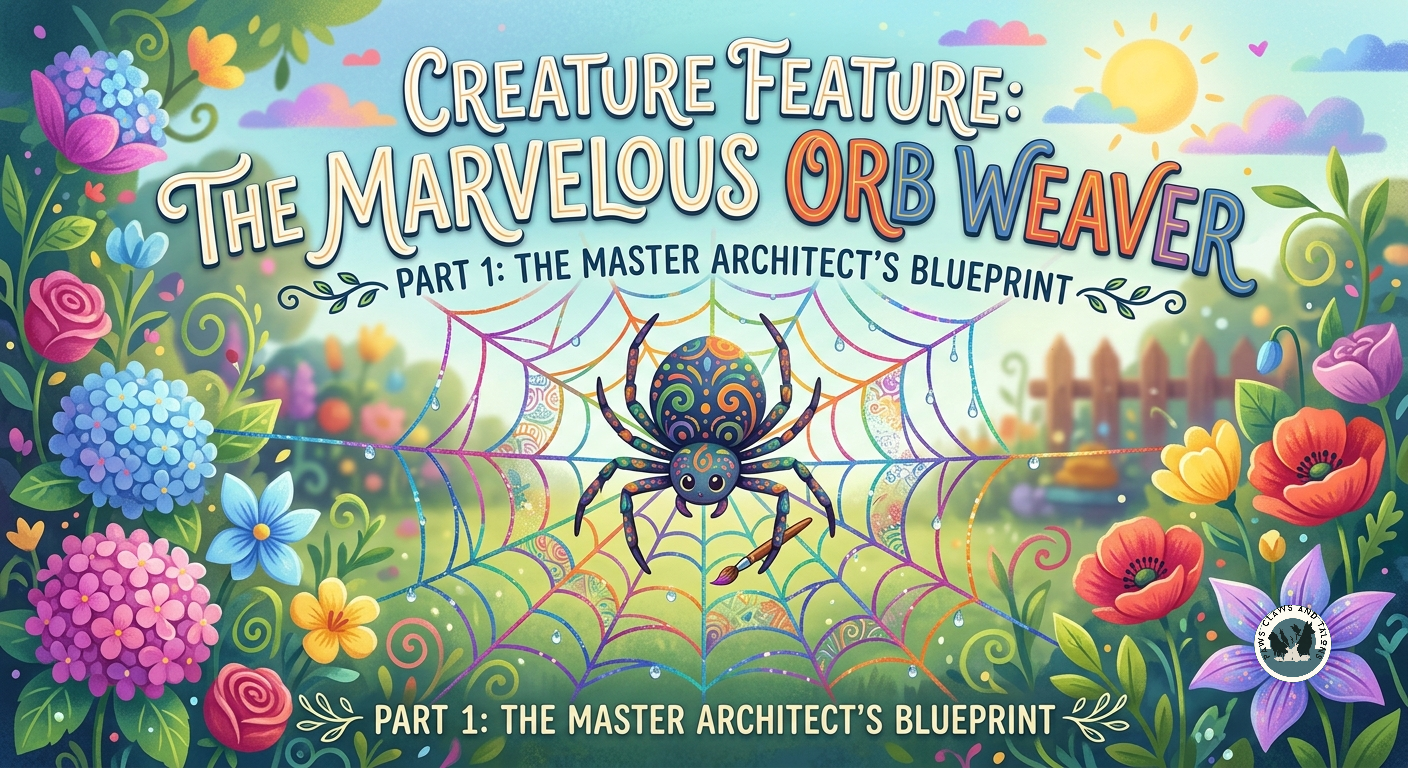
Step outside on a crisp autumn morning, and if the light hits the trees just right, you will see a marvel of natural engineering hanging right in your garden. Today we are shining our weekly spotlight on one of the most hardworking, visually striking, and completely misunderstood creatures in our local backyards: the Orb Weaver spider.
Belonging to the spider family Araneidae, these eight-legged master crafters are responsible for those iconic, perfectly circular, wheel-shaped webs suspended between garden trellises, high grass stems, and porch railings. While their striking body patterns, large abdomens, and sudden appearances in late summer can give even seasoned outdoorsy folks a temporary jump, Orb Weavers are docile, gentle neighbors. They spend their days operating as nature’s ultimate pest control officers, silently protecting our yards without asking for anything in return.
Over the course of this series, we are going to break down the mind-blowing science, daily habits, and engineering marvels of these incredible arachnids. To kick things off, we are taking a deep dive into how they transform raw silk into complex geometric architecture.
Part 1: The Master Architect’s Blueprint
When you walk past a fully constructed orb web glowing in the morning light, you are looking at a masterclass in structural engineering, physics, and material efficiency. The word “orb” actually traces back to an old term for circular or spherical, directly describing the rounded shape of their webs. What makes these structures so impressive is that an Orb Weaver does not just mindlessly throw silk into the breeze and hope for the best. Every single line is laid down in a precise, mathematical order calculated to maximize strength, flex under strain, and trap prey while using the least amount of energy possible.
Phase 1: Casting the Bridge Line
The construction process begins with a high-stakes leap of faith into the wind. The spider crawls up to a high point—like the tip of a tall garden stem or the top of a fence post—raises its abdomen into the air, and secretes a single, ultra-light thread of liquid silk. The ambient breeze carries this fine thread across open air until it catches onto a neighboring branch or structure. Once the spider feels resistance, confirming the line has anchored, it pulls the thread tight, tests its strength, and crawls across it while laying down a second, thicker thread to double its strength. This initial horizontal anchor becomes the main bridge line supporting the entire web network.
Phase 2: Dropping the Y-Frame
With a strong bridge line established, the spider crawls to the center, attaches a new thread, and drops straight down to a lower anchor point, like a fallen leaf or lower branch. This forms a distinct “Y” shape within the structural framework. The exact center point where these three primary lines meet becomes the hub—the structural heart of the web where the spider will sit and monitor for subtle vibration signals when hunting.
Phase 3: Laying the Radial Spokes
Working outward from the hub like the spokes on a bicycle wheel, the spider begins spinning non-sticky structural lines. To maintain balance, it moves back and forth across the frame in a specific order so tension does not pull the structure out of shape. The spider continuously checks the distance between spokes using its front legs as measuring tools, ensuring the geometric grid distributes weight evenly when heavy flying insects slam into it later.
Phase 4: The Auxiliary Scaffolding
Before adding any sticky silk, the spider builds a temporary walkway. Starting from the hub and moving outward, it lays down a loose, non-sticky spiral. This temporary spiral holds the frame rigid and gives the spider a stable walkway to step on as it prepares to coat the web with its high-tension trap layers.
Phase 5: The Capture Spiral
In the final phase, the spider reverses direction and begins working from the outside edges back toward the hub. As it moves inward, it spins a tight, highly elastic spiral coated in microscopic droplets of sticky glue, consuming and replacing the temporary scaffolding as it goes. Moving with incredible speed and agility, an Orb Weaver places hundreds of anchor points across the grid, finishing a high-tension net that is ready to harvest flying pests all night long.
Leave a Reply