
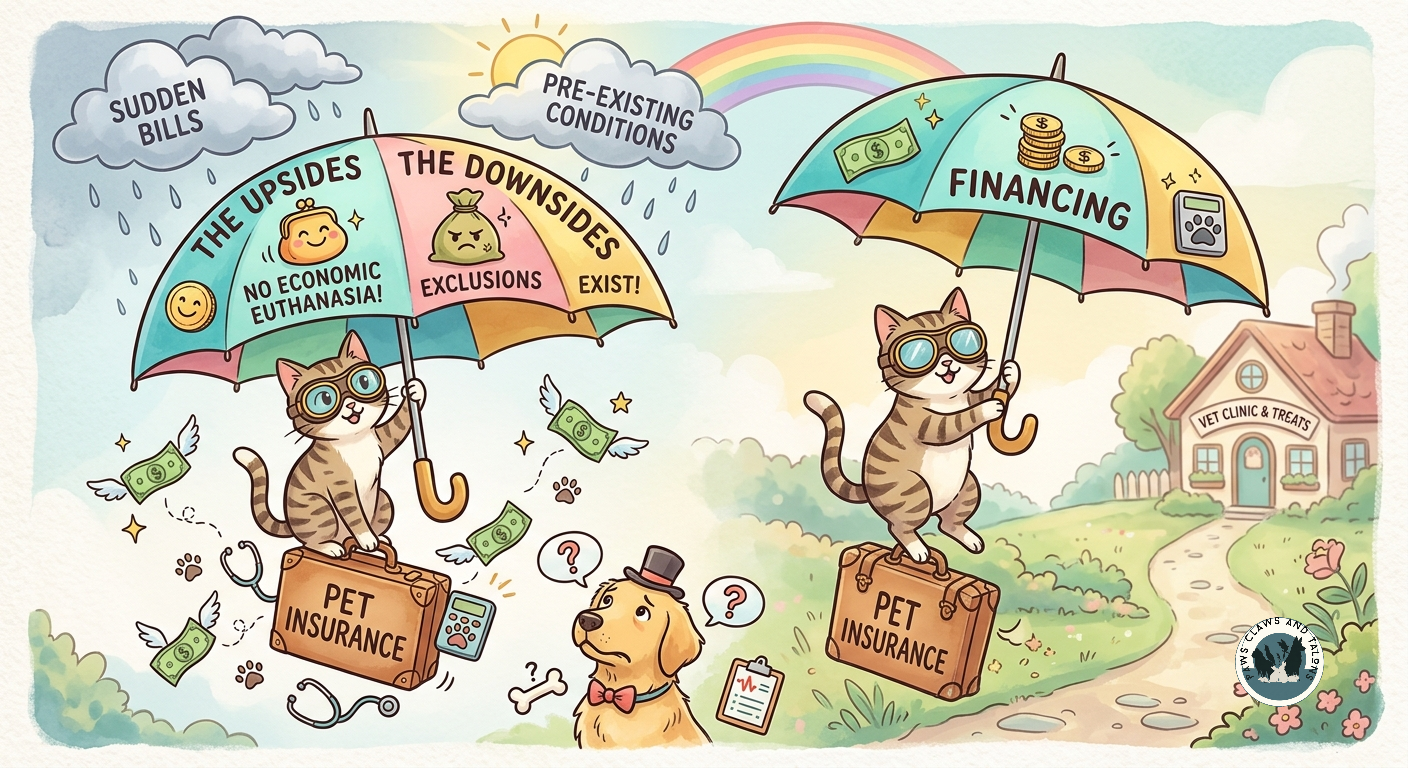
September is National Pet Insurance Month, making it an ideal time to step back from the cute photos and talk about one of the most polarizing topics in pet ownership: how we finance our pets’ medical care.
If you scroll through pet forums, you will find two very distinct camps. One side swears pet insurance saved their wallet during a $7,000 emergency, while the other claims it is a complete waste of money. The truth sits right in the middle. Pet insurance is not a magical savings account, nor is it a scam. It is a risk-management tool.
Here is a look at the good, the bad, and the realistic math behind pet insurance to help you decide if it makes sense for your family.
The Upsides: What Makes It Worth It
The primary job of pet insurance is not to save you money on routine checkups; it is to protect you against catastrophic financial choices.
- It eliminates “economic euthanasia.” The worst position a pet parent can be in is sitting in an emergency room facing a treatable $5,000 condition (like a foreign object blockage or a torn ACL) and realizing they simply do not have the funds. Insurance transfers that risk off your shoulders.
- No network restrictions. Unlike human health insurance, pet insurance generally lets you visit any licensed veterinarian, specialist, or emergency clinic. You pay the bill, submit the receipt, and get reimbursed.
- Coverage for advanced medicine. Veterinary care has skyrocketed in quality. Today, pets have access to MRIs, oncology treatments, physical therapy, and specialized surgeries. Insurance makes high-tech care accessible when it would otherwise be financially out of reach.
The Downsides: The Fine Print That Catches People Off Guard
Pet insurance frustratingly differs from human health insurance in ways that surprise first-time buyers.
- The pre-existing condition void. Almost no standard pet insurance policy covers pre-existing conditions. If your dog had an ear infection recorded in their medical chart before you bought the policy, any future ear issues will likely be excluded.
- The pay-first model. With a few exceptions that pay clinics directly, most pet insurance is reimbursement-based. You still need the cash or credit card line to clear the $3,000 invoice at checkout before waiting two to three weeks for a reimbursement check.
- Premiums rise with age. A policy that costs $30 a month for a puppy can easily climb to $100 or $150 a month as that dog reaches senior status. Rate hikes happen annually based on inflation, location, and the age of the pet.
- Routine care is rarely cost-effective. Wellness add-ons (which cover vaccines, flea prevention, and routine exams) often cost almost as much as the benefits they pay out. In most cases, paying out-of-pocket for standard yearly care is cheaper.
The Realistic Parts of Financing: Insurance vs. A Dedicated Savings Account
A common argument is, “Why not just put $50 a month into a high-yield savings account instead?”
That strategy works on paper, but timing is the flaw. If you save $50 a month, you will have $600 at the end of Year 1. If your pet swallows a sock six months after you adopt them, a $600 savings balance will not cover a $3,500 surgery.
Self-insuring via a dedicated savings account works best if you already have a liquid safety net (e.g., a dedicated $5,000+ emergency fund ready on Day 1). If you do not have a chunk of cash sitting around for pet emergencies, insurance provides immediate leverage: you pay a predictable monthly fee in exchange for instant access to thousands in coverage after a short waiting period.
Situations Where Pet Insurance Is Highly Recommended
While every situation is unique, insurance is especially critical in a few specific scenarios:
- High-Risk or Purebred Breeds: Certain breeds are prone to costly genetic issues. French Bulldogs (respiratory issues, spinal problems), Golden Retrievers (cancer risks), and German Shepherds (hip dysplasia) carry predictable health hurdles that can easily sum tens of thousands of dollars over a lifetime.
- Young Puppies and Kittens: Enrolling a pet on day one—before any medical issues are documented in their chart—is the absolute best way to ensure maximum coverage with zero pre-existing exclusions.
- Outdoor or High-Energy Pets: Dogs that hike, ingest random objects, or frequent dog parks, as well as outdoor cats, run a significantly higher risk of physical trauma, toxic ingestions, and fight wounds.
- Owners Without Cash Reserves: If an unexpected $2,000 expense would cause severe hardship, force you onto high-interest credit cards, or derail your household budget, the predictable monthly premium of insurance offers crucial stability.
The Bottom Line
Pet insurance is not an investment designed to yield a positive financial return; it is a safety cushion. If you pay premiums for ten years and never use the coverage for a major crisis, you haven’t “lost” money—you bought ten years of peace of mind. National Pet Insurance Month is a great time to pull quotes, read policy exclusions carefully, and decide how you plan to handle the inevitable surprise expenses that come with loving a pet.
Leave a Reply