
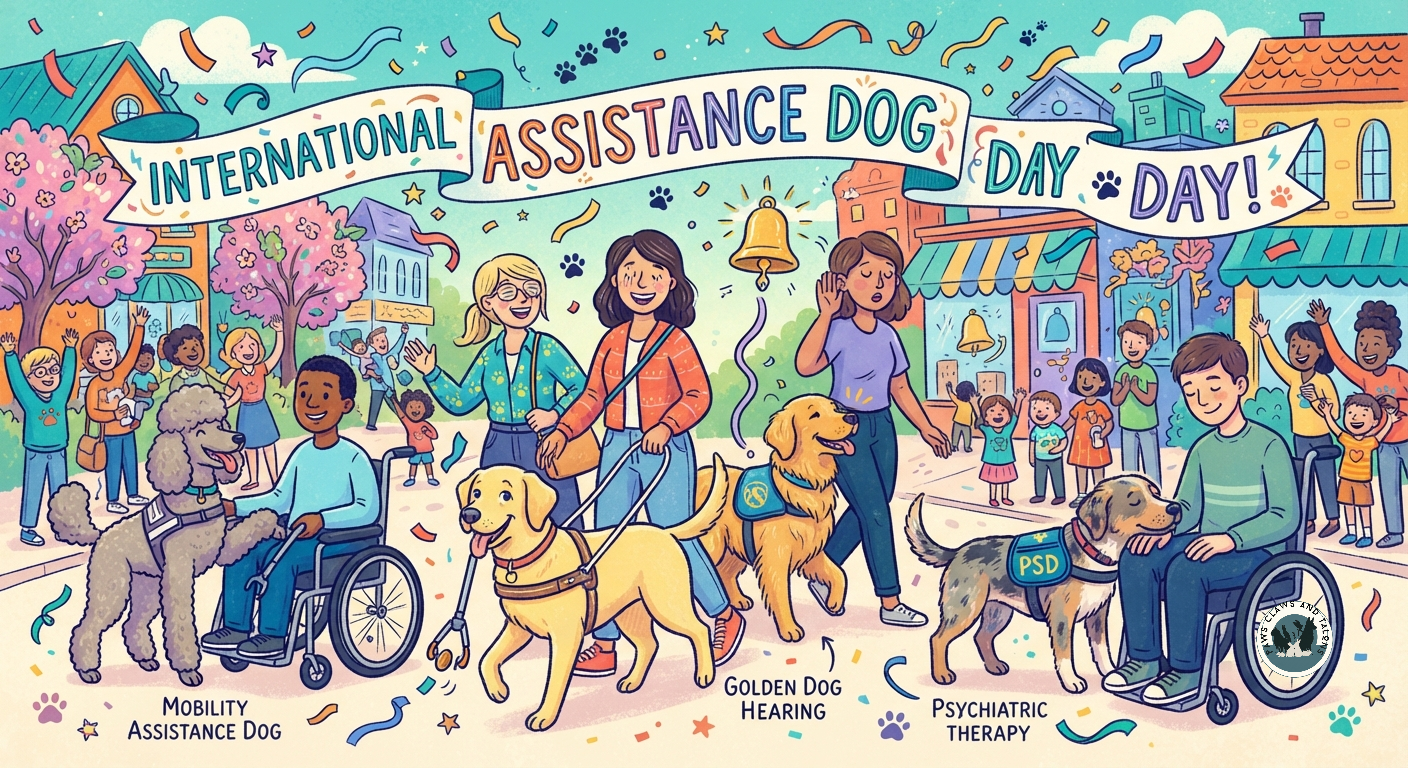
Grab your favorite treat pouch and prepare for a round of applause because August 4th is International Assistance Dog Day! It is the ultimate calendar holiday dedicated to our favorite four-legged superheroes. While these pups might not wear literal spandex capes, they are out there every single day doing heavy lifting, obstacle dodging, and emotional heavy-duty rescue work. Let us dive into the wonderful, tail-wagging world of assistance dogs, the history behind the holiday, and why these fabulous furry masterminds deserve all the cheese.
How This Hall-of-Fame Holiday Began
Every good movement needs a birthday, and this one was cooked up to shine a massive spotlight on the incredible dogs who go above and beyond standard good-boy duties. While assistance dogs trace their deep roots back to post-World War I Europe—where brilliant pioneers started training guide dogs for blinded veterans—International Assistance Dog Day was established to celebrate the modern evolution of working partnerships. It is a day dedicated to honoring the dogs themselves, cheering on the dedicated puppy raisers and trainers, and giving a hearty high-five to the handlers who navigate the world alongside their trusty sidekicks.
Why These Super-Pups Rule the Universe
Let us be honest: regular dogs are already pretty great at sleeping on the couch and eating crumbs. But assistance dogs? They are operating on an entirely different stratosphere of brilliance. Their importance cannot be overstated, touching every corner of daily life:
- Professional Independence Boosters: Forget needing a second pair of hands—these dogs are pros at opening doors, retrieving dropped keys, turning lights on, and fetching essentials without missing a beat.
- The Ultimate Medical Alarm System: Some special pups can sense internal physiological shifts before a cardiac event, severe allergy, or blood sugar drop even happens. Meanwhile, psychiatric assistance dogs step in like tiny furry zen masters to interrupt panic attacks, provide deep pressure therapy during stressful moments, and act as a physical buffer in crowded rooms.
- Navigation Extraordinaire: Guide dogs serve as expert navigators for individuals with visual impairments, smoothly steering around chaotic obstacles, construction zones, and bustling public transit.
- Certified Social Icebreakers: Beyond doing heavy-duty tasks, these dogs act as ambassadors of joy, melting away social isolation and making the world a much friendlier place.
Decoding the Squad: Types of Assistance Dogs
Not all heroes wear capes, and not all assistance dogs do the exact same job! Here is a quick lineup of the main squads putting in the work:
- Guide Dogs: The ultimate trusty navigators partnering with individuals who are blind or visually impaired to ensure safe, smooth travels everywhere they roam.
- Hearing Dogs: The high-alert squad that lets individuals who are deaf or hard of hearing know when the doorbell rings, smoke alarms sound, or someone is calling their name, guiding them straight to the source.
- Service Dogs: The versatile all-stars trained to perform specific tasks for individuals with disabilities. This category includes psychiatric service dogs, medical alert wizards, autism support champions, and mobility support dynamos.
From Fuzzy Potato to Professional Pro: The Training Journey
Becoming an assistance dog is not something you wing on a Tuesday afternoon. It is an Olympic-level journey that takes years of dedication:
- The Early Days of Chaos Training: It all starts when volunteer puppy raisers take in tiny, wiggly fuzzballs. Their main job? Socializing the pup, teaching basic manners, and exposing them to weird sounds, scary vacuum cleaners, and bustling public spots.
- Graduating to Advanced Academy: Once they grow out of their initial puppy antics, the dogs head off to professional training camps where they master specialized task work tailored to specific human partners.
- The Ultimate Matchmaker Moment: Finally, the dog is matched with a handler based on lifestyle, pace, and personality. They complete intensive team training together, forging a lifelong bond built on trust, teamwork, and mutual adoration.
Public Access Etiquette: Look, Admire, But Do Not Touch!
Assistance dogs have special legal access rights that let them accompany their handlers into restaurants, grocery stores, and everywhere else the rest of us go. Because they are working hard on the clock, public etiquette is super important:
- Keep Your Hands to Yourself: As tempting as it is to squeal “can I pet that dog?!,” remember that a working dog is essentially medical equipment with fur. Distracting them with baby talk, petting, or snacks can put their human partner’s safety at risk.
- Talk to the Human: If you want to say hello or ask a question, always direct your conversation to the human partner, not the dog.
- Respect the Vest: When that vest or harness is on, think of the dog as an elite ninja on a mission. Give them space to do their vital work!
Leave a Reply