Protocol: The Olfactory Anchor (OA)
Institutional Role: Cognitive Olfactory & Sensory Enrichment
Stewardship Level: Master (The Fabricators & Textile Architects)
Validation: Scent-Dispersal Core / Reinforced Exoskeleton
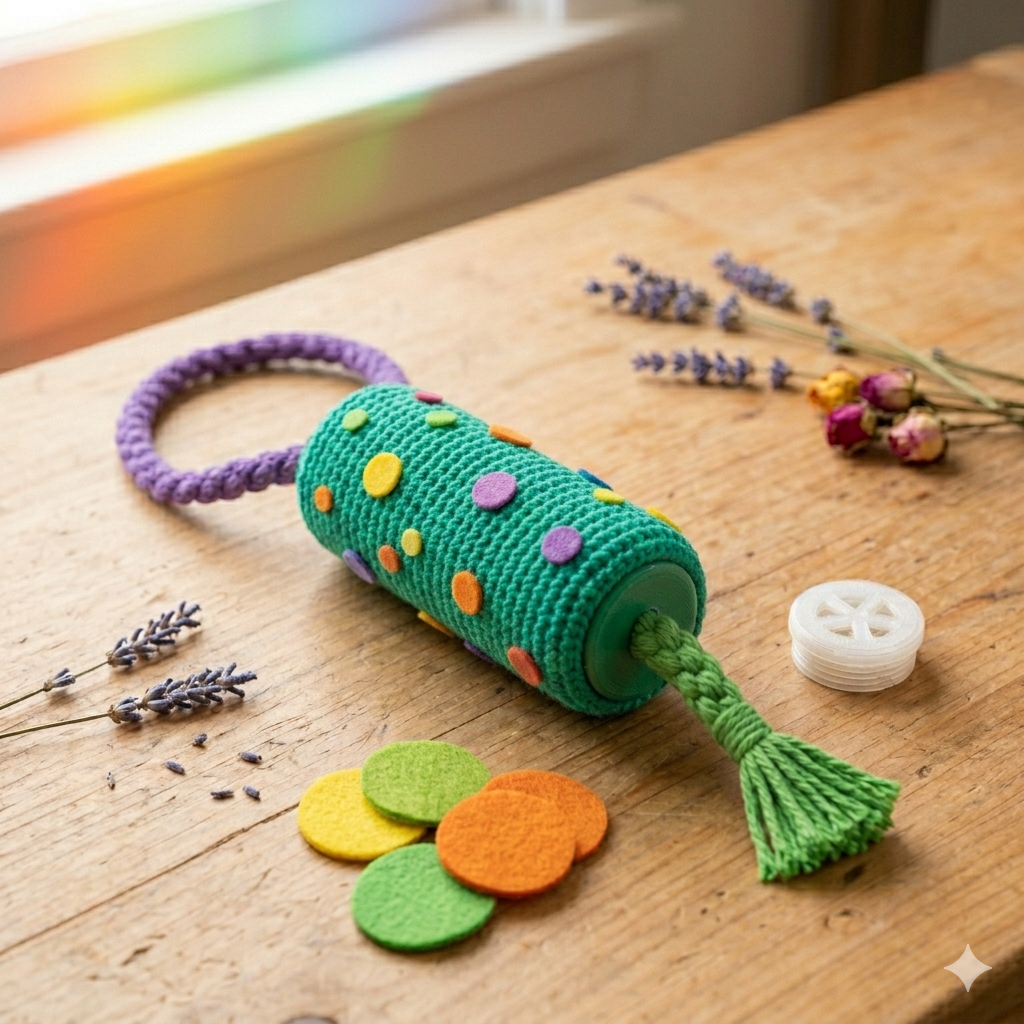
The Olfactory Anchor (OA) is a specialized, dual-material asset engineered for the Biological Engine’s advanced search-and-rescue or enrichment protocols. Transitioning from basic play to technical nose-work, this protocol integrates a perforated polymer vessel with a high-density textile sleeve. It is designed to facilitate mental exhaustion and physical drive by challenging the resident’s ability to track specific scents during high-energy interaction.
The Material Specifications
| Component | Institutional Role | Function |
| Vented PETG Cylinder | The Bio-Pod Core | A food-safe, 3D-printed chamber with fine perforations for controlled scent dispersal. |
| Heavy-Duty Cotton Twine | The Primary Braid | High-tension crochet or knit material providing the tactile grip and structural sleeve. |
| Scent-Soaked Felt Disk | The Olfactory Charge | An internal absorbent pad saturated with institutional scents (e.g., Lavender or Beef Broth). |
| Threaded Polymer Cap | The Containment Seal | A screw-top closure that prevents direct dental contact with the internal scent media. |
Assembly Instructions for the Unified Teams
1. Engineering the Perforated Core (The Fabricators)
The engineering team must print the Bio-Pod using food-safe PETG filament with a 100% infill for maximum crush resistance. Ensure the ventilation apertures are no larger than 2mm to prevent liquid leakage while maintaining a high-flow “scent chimney” effect.
2. Encapsulating the Exoskeleton (The Textile Architects)
Architects will execute a Thermal Stitch or Tunisian Crochet sleeve directly around the printed core. This “cradle” must be tight enough to eliminate any movement between the polymer and the textile, ensuring the core remains a stable ballast during high-torque events.
3. Extending the High-Tension Tethers
From the distal ends of the sleeve, extend two three-strand braids using the remaining twine. These tethers serve as the manual interface for the “Steward,” allowing for controlled tug-and-track sessions while keeping the resident focused on the scented epicenter.
4. Charging the Olfactory Engine
Insert a pre-soaked felt pad into the chamber and secure the Threaded Cap. The “Steward” should verify that the scent is detectable at a distance of 12 inches before deployment to ensure the “Impact” protocol is properly calibrated.
5. Deployment & Impact Validation
Once the OA is active, introduce the asset to the testing zone. A successful “Impact” is recorded when the resident engages in sustained sniffing and targeted tracking, followed by physical interaction with the textile sleeve. This indicates the Biological Engine is functioning at peak cognitive capacity.
Resident Candidate List: Cognitive & Working Divisions
Mustelidae Foraging Squads (Ferrets): Utilizing the scent chamber during floor-time protocols helps these high-energy inhabitants practice natural burrowing and search behaviors.
Canidae Tracking Units (Search & Rescue): The primary candidates for the Olfactory Anchor. This tool provides the mental stimulation required to keep high-drive breeds focused on scent discrimination tasks.
Felidae Precision Teams (Domestic Cats): Smaller variants of the OA, charged with silvervine or catnip scents, encourage “bat-and-track” behaviors, keeping indoor residents agile and alert.
Safety & Maintenance Protocol
Please supervise your pet during play. No toy is indestructible. Please inspect regularly and discard if damaged or if parts become loose.
 Paws, Claws and Talons Foundation